Conservation Priorities Portfolio (CPP) 2.0
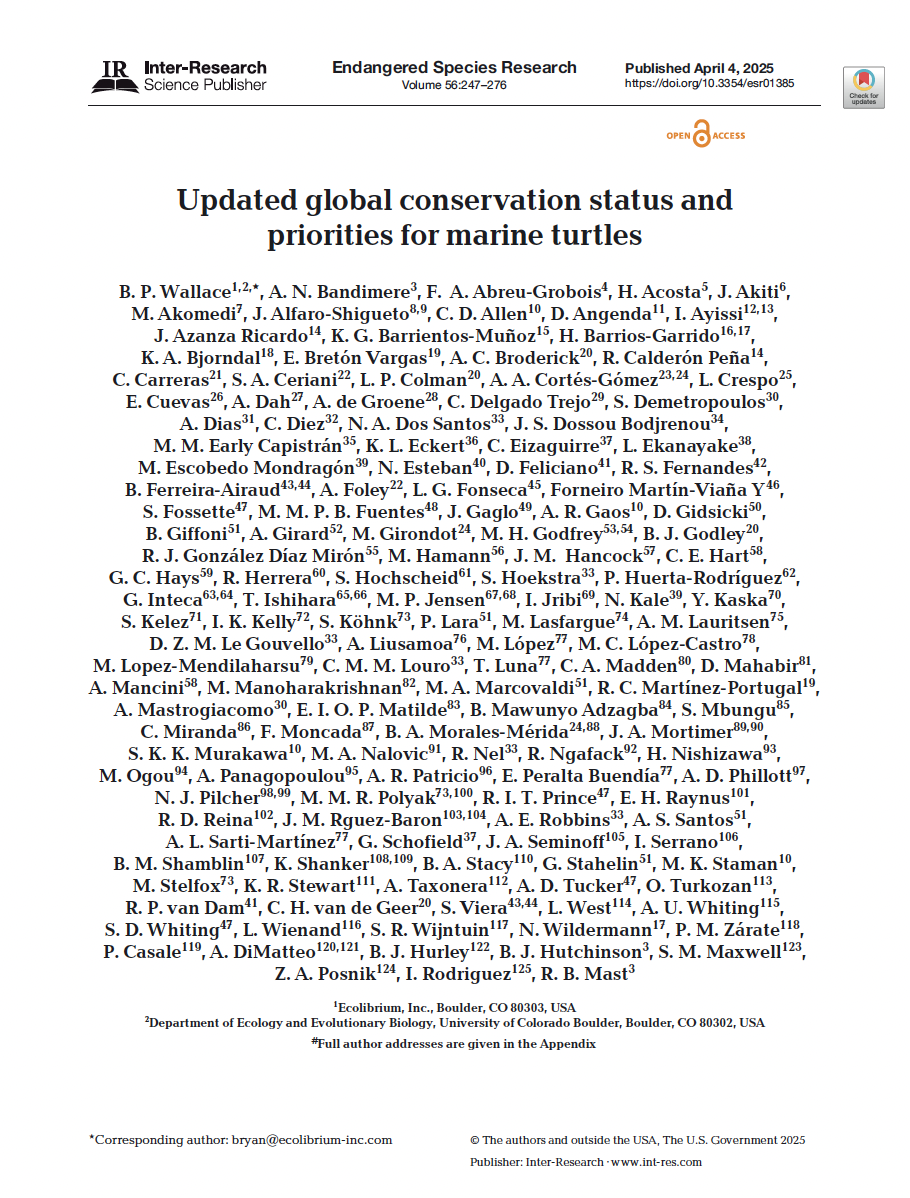
The Conservation Priorities Portfolio 2.0 (CPP), or “Updated Conservation Status and Priorities for Marine Turtles”, is part of the IUCN-SSC Marine Turtle Specialist Group’s Burning Issues 7 (BI-7) workshop and evaluates the risks, threats, and conservation capacity in each of the marine turtle “Regional Management Unit” (RMU). This assessment is an update to the original 2011 paper, and is the culmination of years of work by nearly 150 experts in 50 countries. Read the full publication here.
To determine the most vulnerable RMUs, authors scored population risks including population abundance, long-term and short-term population trends, rookery vulnerability, and genetic diversity as well as threats by fisheries bycatch, human consumption of turtles and their eggs, coastal development, pollution and pathogens, and climate change for each RMU. This iteration also added scores for conservation capacity, which included enforcement capacity, resource availability, coordination capacity, technical expertise, and socio-economic index.
The goal of CPP is to help answer questions like:
How threatened are sea turtles?
Which sea turtle populations are the most threatened?
What threats and risks are having the greatest impact on these sea turtle populations?
By identifying the sea turtle populations that are most at risk, pinpointing what threats are responsible for this status, and determining what level of conservation capacity exists for those populations, sea turtle conservationists can more effectively target their conservation efforts and allocate their resources to the threats and populations that need it the most.
CPP 2.0 Resources
Regional Summaries
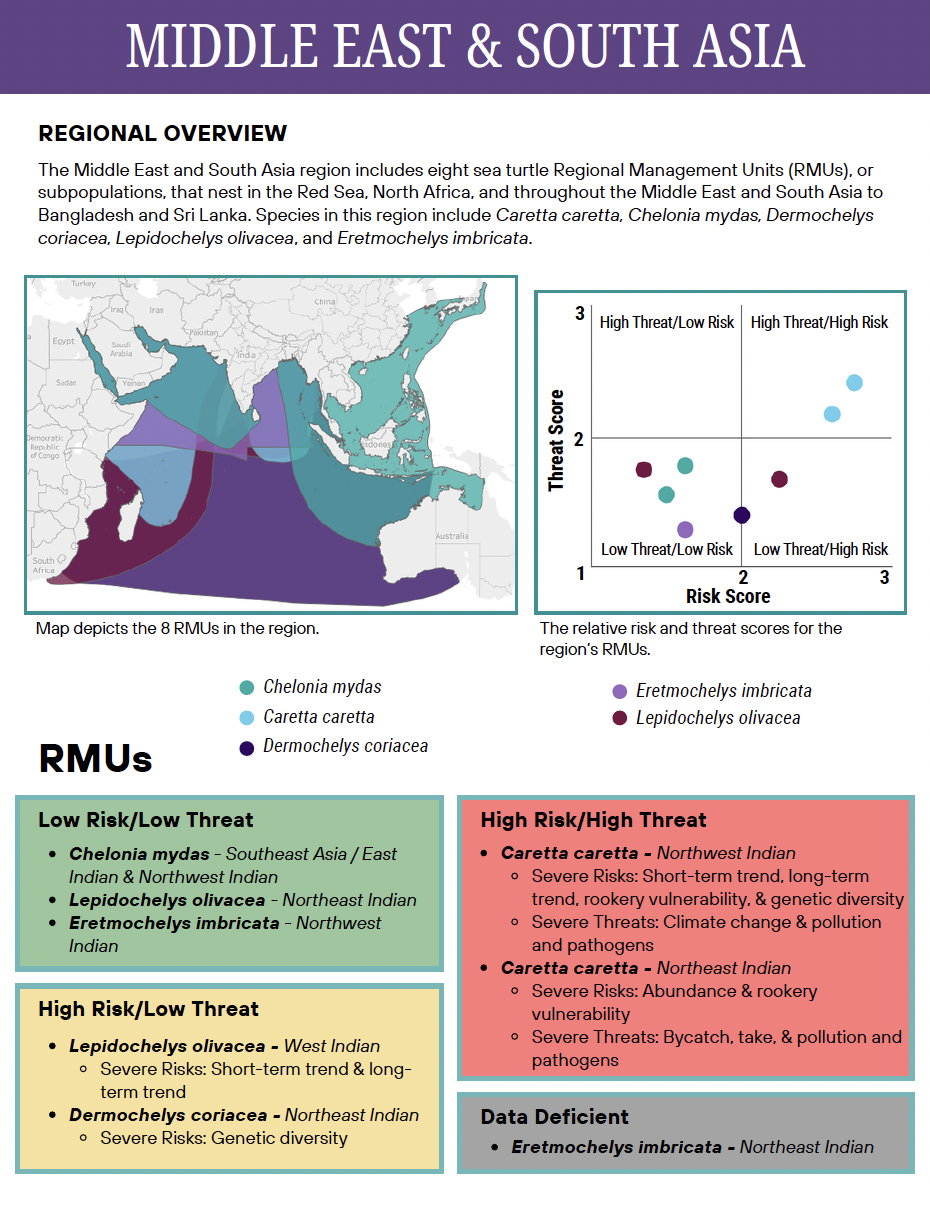
These documents break down the results of CPP at a regional level to facilitate communication and education about threats and risks.
Download regional summaries below:
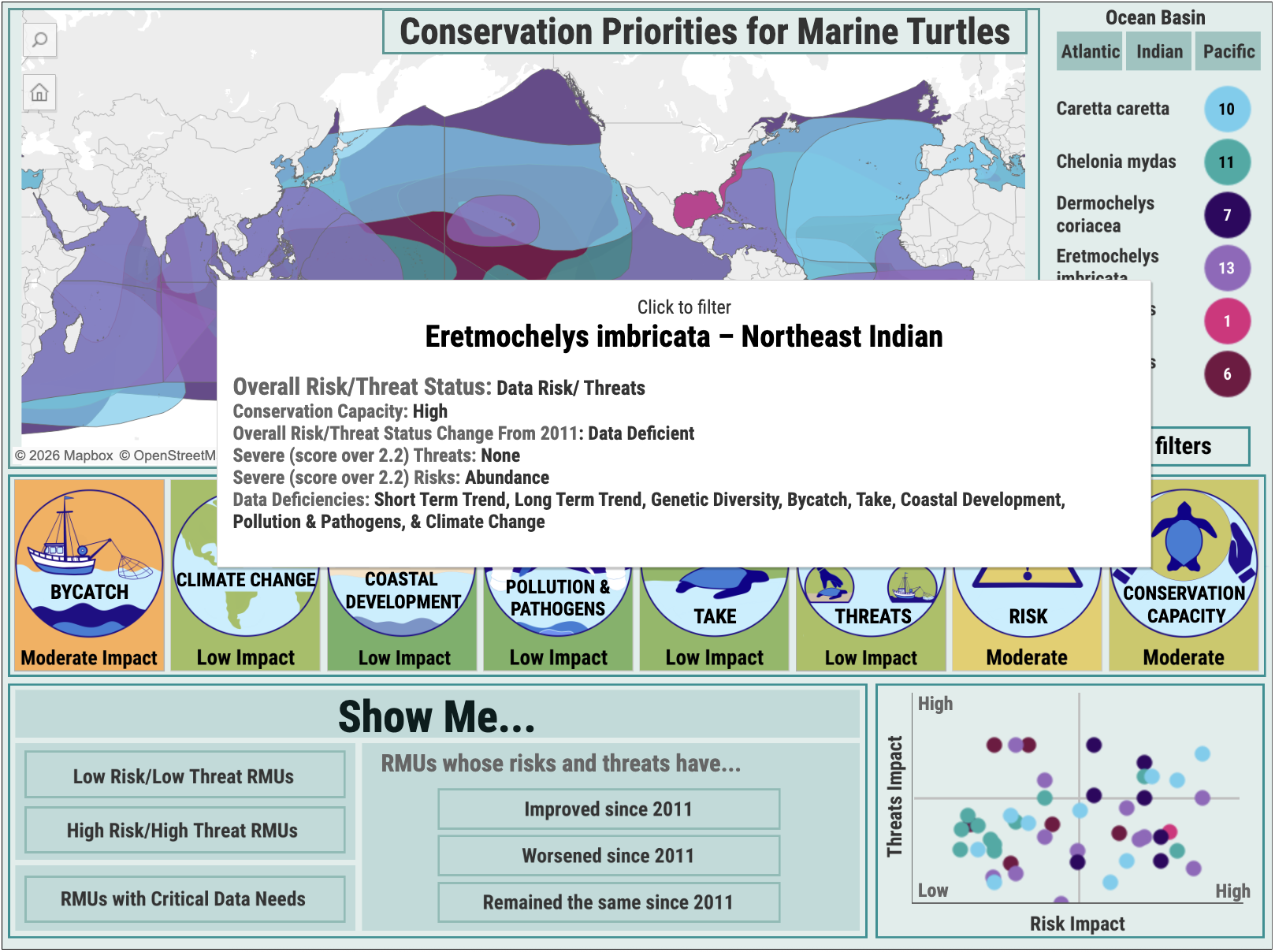
Interactive Dashboard
Interact with the results from CPP 2.0 to learn about each sea turtle population’s greatest threats, risks, and data gaps.